


Tantalum Stewardship – Recovering and Recycling Tantalum from Mining Operations and Part Manufacturers, Industries
Part 1 of a 2-part series that highlights how the tantalum industry embraces the “green” movement.
Part 1 focuses on the beginning and ending tantalum operations – the recovery of tantalum as a co-product of lithium hard rock mining and recovery, recycling, and reusing inside tantalum part/product manufacturing – e.g. capacitor, semiconductor, etc., as part of aged electronics and industrial parts. Part 2 will focus on the recovery and recycling efforts inside the tantalum production facilities.
Tantalum Ore Recovery from Lithium Ore Waste Stream
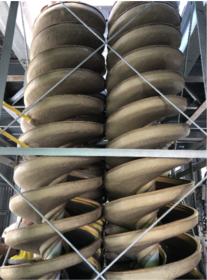 The automobile industry is undergoing a significant shift from internal combustion engines to electric vehicles (EV). Demand for EV battery materials, including lithium, is rapidly growing and in the case of some of these materials, demand is expected to outstrip supply in the near term. Lithium supply growth is having a significantly positive impact on the supply of tantalum as lithium and tantalum occur together in some (but not all) hard rock ore bodies. This is particularly the case in Western Australia (WA) where, as an example, the Wodgina mine in the Pilbara region of WA has one of the world’s largest reserves of both lithium and tantalum. The accelerated lithium production plan for Wodgina also accelerates recovery of tantalum as a co-product. This is one example of how new sources of tantalum are growing to meet increasing demand in many high growth electronic, automotive, additive manufacturing, aerospace, medical, and defense related applications.
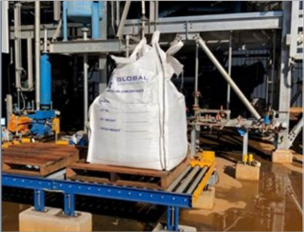 Tantalum recovery as a co-product of lithium mining is good news for the environment and it broadens and diversifies tantalum supply. The tantalum ore recovery occurs through the use of tantalum recovery plants (TRP). Using TRP’s to recover the tantalum from a “waste stream” is essentially a “green” process, recovering the tantalum ore for use in the tantalum industry. Therefore, tantalum recovery as a co-product of lithium mining supplies a valuable and strategic metal without requiring use of an additional mining step or additional resources like electricity, fuel, water, etc. – digging once for two minerals!
Global Advanced Metals (GAM), a world-leading producer of innovative and conflict-free tantalum products, owns the tantalum co-product at Wodgina and Greenbushes, two of the largest lithium and tantalum resources in the world, both located in WA. GAM recovers and upgrades tantalum from the lithium mining operation before shipping for downstream finished product processing at its US and Japan based manufacturing plants.
As lithium output expands to meet the demands of the clean energy revolution, so too will the recovery of green tantalum ore supply to meet the increasing electronics, medical, aerospace, additive manufacturing, and defense demands.
Tantalum Parts and Industrial Recovery
The tantalum supply chain as a whole is very aligned with the importance of recovering and recycling tantalum. Benefits range from the obvious value of tantalum to the not so obvious cycle time improvements. Approximately two-thirds of the annual global consumption of tantalum is in electronics – tantalum capacitors, tantalum sputtering targets for semiconductors, and high-purity tantalum oxide for surface acoustical wave filters (SAW filters). Following is a look into ways the tantalum part/product manufacturers and industries as a whole address recovering and recycling tantalum:
- Some of the forms tantalum capacitor manufacturers recover and recycle
tantalum

- Tantalum powder that escapes the die as
part of the anode pressing process. - Tantalum wire remnants often referred to as
“pins”. - Off-quality tantalum anodes that have not
yet been encapsulated. - Encapsulated fully or partially finished
tantalum capacitors. Recovery of the
tantalum from this form or part requires
removal of the packaging case.
- Tantalum powder that escapes the die as
-
- Some of the forms the semiconductor industry recovers and recycles tantalum
-
- Spent or used tantalum sputtering targets.
- Tantalum remnants or losses during the sputtering target manufacturing.
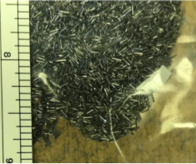
- The nickel superalloy and cast part industry is long experienced in segregating
like alloys and recovering and recycling the contained tantalum -
- Losses, sometimes called splatter, as part of the superalloy casting are
collected and commonly recycled in a future heat.
Superalloy cast parts that do not meet quality requirements are recycled.
Retired aircraft and generator fan blades are characterized and re-melted
with like virgin superalloy material.
- Losses, sometimes called splatter, as part of the superalloy casting are
- The defense, medical, energy, and chemical processing industries also recover
and recycle tantalum as part of their respective part manufacturing.
- The electronics industry continues to develop innovative ways to identify and
recover electronic components, and recycle specific materials and metals from
them. For example, tantalum capacitors recovered from electronics circuit
boards, as described above, would require removal of the packaging case to
access the tantalum anode and tantalum wire.